
Pediatric Dentistry
At South Shore Dental Arts, we extend a warm welcome to pediatric patients and their families. We believe in the importance of early dental care to promote healthy smiles that last a lifetime. As part of our commitment to pediatric dentistry, we offer a comprehensive array of services to meet the unique needs of children.
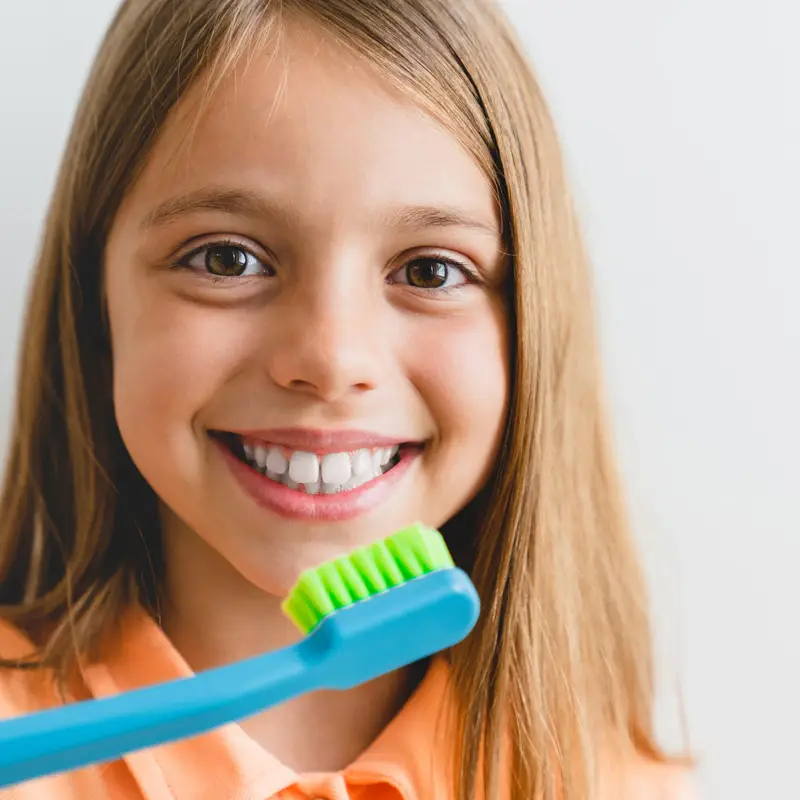
Pediatrics
The American Academy of Pediatric Dentistry recommends that a child’s first dental visit occur within 6 months of the eruption of their first tooth or by their first birthday. This initial visit is crucial for establishing a positive dental experience and setting the age for ongoing oral health care.
During pediatric dental visits, our compassionate team provides gentle dental exams to assess the child’s oral health and identify areas of concern. We offer hygiene treatments to clean and polish the teeth, remove plaque and tartar build-up to prevent cavities and gum disease.
To help prevent tooth decay, we offer fluoride treatments that strengthen tooth enamel and reduce the risk of cavities. For children who may feel anxious during dental appointments we offer nitrous oxide sedation (laughing gas) to help them feel relaxed and comfortable.
In addition, we offer innovative treatments such as Silver Diamine Fluoride (SDF) to arrest dental decay and prevent further damage to teeth. Our skilled team also provides restorations such as tooth-colored fillings, stainless steel crowns, and pulpotomies, to restore and preserve the health of decayed or damaged teeth.
When necessary, we provide extractions for teeth that are severely decayed or for orthodontic treatment planning. Our priority is to ensure the comfort and well-being of our pediatric patients throughout their dental care journey, providing gentle and comprehensive treatment in a child-friendly environment.
FAQ’s Pediatric Dentistry
At what age should my child first visit the dentist?
It is recommended that a child have their first dental visit by their first birthday or within six months of their first tooth erupting.
What services do you offer for pediatric patients?
We offer a range of services tailored to children’s needs, including routine exams, orthodontic evaluations, cleanings, fluoride treatments, sealants, tooth-colored fillings, stainless steel crowns, pulpotomies, extractions and silver diamine fluoride treatment.
How can I prepare my child for their first dental visit?
You can prepare your child by explaining what to expect in simple, positive terms. Reading books about going to the dentist or role-playing dental visits at home can also help ease anxiety. We often recommend parents to bring the child in with them or an older sibling to observe a dental check-up so they can feel reassured that it will be a positive experience.
How often should my child have dental check-ups?
For most children, regular dental check-ups every 6 months are recommended. However, the frequency may vary depending on the child’s individual needs.
Are dental x-rays safe for children?
Yes, dental x-rays are safe for children. We recommend x -rays when necessary for diagnosis and treatment planning.
At what age do children typically start losing baby teeth?
Children typically start losing their baby teeth around age six or seven, with the process continuing into their early teens as permanent teeth erupt.
What can I do to help my child maintain good oral hygiene at home?
Encourage your child to brush their teeth twice a day with fluoride toothpaste, floss daily, and limit sugary snacks and drinks. Supervise brushing until they can do it effectively on their own.
At what age should I start using fluoride toothpaste for my child?
According to the American Dental Association, parents should use a rice-grain size smear of fluoride on a child’s first teeth and move up to pea-size blobs once the child reaches age three. Children should be taught to spit out excess toothpaste.
Dental Sealants
At South Shore Dental Arts we offer Dental sealants which are thin plastic coatings applied to the chewing surfaces of molars to prevent tooth decay. They are an essential part of preventive dentistry and offer several benefits in maintaining optimal oral health:
- Prevention of tooth Decay: Dental sealants act as a protective barrier, sealing off deep grooves and fissures on the chewing surfaces of teeth where food particles and bacteria can accumulate. By preventing food and bacteria from getting trapped in these areas, sealants help reduce the risk of tooth decay and cavities.
- Early Intervention: Dental sealants are often applied to the permanent molars of children and teenagers as soon as these teeth erupt, typically between the ages of six and fourteen. This early intervention helps protect the newly erupted teeth during their most vulnerable period, reducing the likelihood of decay in the future.
- Painless and Non-Invasive: The application of dental sealants is a painless and non-invasive procedure that can be completed quickly during a routine dental visit. The sealant material is applied in liquid form and hardened with a special curing light, requiring no drilling or anesthesia.
- Long-Lasting Protection: Dental sealants provide long-lasting protection against tooth decay, typically lasting for several years with proper oral hygiene and regular dental check- ups. They are durable and can withstand the forces of chewing and daily wear and tear.
- Cost Effective: Dental Sealants are a cost-effective preventive measure compared to the treatment of tooth decay and cavities. Investing in sealants can help save money on future dental treatments and maintain oral health in the long run.
FAQ’S Sealants
What are Dental Sealants?
Dental sealants are thin plastic coatings applied to the chewing surfaces of molars to prevent tooth decay.
How do dental sealants work?
Sealants work by creating a protective barrier over the pits and grooves of the teeth, preventing food particles and bacteria from accumulating and causing cavities.
Who can benefit from dental sealants?
Children and teenagers are the primary candidates for dental sealants as they are most prone to this type of tooth decay, but adults with deep grooves in their molars can also benefit.
Are dental Sealants safe?
Yes, dental sealants are safe. They are made of biocompatible materials and are commonly used in preventive dentistry.
How long do dental sealants last?
Sealants can last for several years with proper care. However, they should be checked during regular check-ups and will be replaced if necessary.
Are dental sealants visible?
Dental sealants are typically clear or tooth-colored, making them virtually invisible when applied to teeth.
What is the procedure for the application of sealants?
The application of sealants is a quick and painless process. The tooth surface is cleaned, an acidic gel is then applied to slightly roughen the enamel, the gel is rinsed, and then the sealant is brushed on and then hardened with a special light.
Stainless Steel Crowns & Pulpotomy
At South Shore Dental Arts we provide a procedure known as Stainless Steel Crown with Pulpotomy for pediatric patients. These are common procedures in pediatric dentistry performed to treat severely decayed primary (baby) teeth. Most commonly these are performed on a tooth at the same visit.
Indications for Stainless steel crowns:
- Extensive Decay: When a primary tooth has extensive decay that cannot be restored with a filling, a stainless steel crown provides durable and long-lasting protection.
- Fractured or broken teeth: Stainless Steel Crowns can restore primary teeth that have suffered significant fractures or structural damage.
- Following pulpotomy: Stainless steel crowns are often placed after a pulpotomy procedure to protect the remaining tooth structure.
Pulpotomy
A pulpotomy is a dental procedure performed to remove infected or inflamed pulp tissue from the crown portion of a primary (baby) tooth while preserving the healthy pulp in the root canals. It is commonly used to treat teeth with deep cavities that have reached near the pulp chamber.
Stainless Steel Crown with Pulpotomy Procedure
- Anesthesia: Before beginning the procedure, a local anesthetic will be administered to numb the area around the tooth to ensure your child’s comfort throughout the procedure.
- Tooth Preparation: The damaged tooth structure will be removed, and the tooth will be reshaped to accept the stainless steel crown.
- Pulpotomy: Once the decay is removed, the dentist makes an opening in the chewing portion of the tooth to access the inflamed pulp tissue. This tissue is removed to help alleviate pain and to prevent further infection.
- Stainless Steel Crown Placement:
A stainless steel crown is fitted over the tooth ensuring that it fits snugly and securely.
Cementation and Polishing: The stainless steel crown is cemented in place, the bite is adjusted and the tooth is polished to remove any excess cement.
FAQ’s Stainless Steel Crown with Pulpotomy
Why would my child need a stainless steel crown with pulpotomy?
This procedure is recommended when a primary tooth has extensive decay or damage that cannot be effectively treated with a traditional filling. It helps to alleviate pain, prevent further infection, and preserve the tooth until it naturally falls out.
Is the procedure painful for my child?
A local anesthetic will be administered to numb the area before starting the procedure, ensuring that your child remains comfortable during the procedure. We also offer nitrous oxide sedation if your child is apprehensive.
How long does the procedure take?
The procedure typically takes 45 minutes to an hour to complete, depending on the complexity of the case and the child’s cooperation.
Are stainless steel crowns safe for my child?
The stainless steel crown and pulpotomy procedure is safe for children and is commonly used in pediatric dentistry. They are durable and provide excellent protection for primary teeth.
How long will the stainless steel crown last?
Stainless steel crowns can last for several years, often until the primary tooth naturally falls out to make way for the permanent tooth. However, regular dental check-ups are necessary to monitor the crown’s condition and ensure its longevity.
Will the stainless steel crown affect my child’s appearance or speech?
While stainless steel crowns may look different than natural teeth, they are placed on back teeth and do not significantly affect appearance. Speech may be temporarily affected immediately after the procedure, but it should return to normal as your child adjusts to the crown.
How should I care for my child’s stainless steel crown?
It is important to brush and floss regularly. It is recommended to avoid sticky candy or chewing gum that may loosen the cap over time.
Are there risks or complications associated with stainless steel crowns with pulpotomies?
While complications are rare, they can include sensitivity, irritation or infection. It is essential to follow the post procedure recommendations and attend regular dental check-ups to monitor your child’s dental health.
What if my child’s stainless steel crown comes loose or falls off?
If the crown becomes loose or falls off, contact your dentist immediately for evaluation and possible re-cementation. Do not attempt to reattach the crown yourself, as improper placement can lead to further complications.
What should I expect immediately post operatively?
Your child will be numb immediately after the procedure. Therefore, it is very important to make sure they do not eat or drink until the numbness is fully worn off. Also, be sure they do not chew or bite their lip. The numbing sensation is new to them, and children are prone to causing damage to their soft tissue without realizing it. This can result in severe swelling or ulceration of the cheek, tongue and or lips which can take several weeks to resolve.
Space Maintainers
At South Shore Dental Arts we offer space maintainers which are specialized dental appliances used in pediatric dentistry to preserve the space left by a prematurely lost primary (baby) tooth until the permanent tooth erupts. They are essential for preventing crowding and misalignment of permanent teeth, maintaining proper occlusion (bite), and ensuring optimal dental development. There are several types of space maintainers, each with specific indications:
- Band and Loop Space Maintainer Indications: Band and loop space maintainers are typically used when a single primary molar is lost prematurely. They consist of a stainless steel band fitted around an adjacent tooth and a loop extending into a space left by the missing tooth.
Function: The loop prevents adjacent teeth from drifting into the empty space, preserving the space for the eruption of the permanent tooth. - Distal Shoe Space Maintainer Indications: Distal Shoe Space maintainers are used when the primary second molar is lost prematurely and the permanent first molar has not yet erupted or is only partially erupted.
Function: The distal shoe component of the space maintainer extends below the gum line to guide the eruption of the permanent first molar and prevent it from drifting forward. - Bilateral Space Maintainer Indications: Bilateral space maintainers are used when multiple primary teeth are lost prematurely on both sides of the same dental arch.
Function: These space maintainers consist of two bands attached to adjacent teeth on both sides of the dental arch, with a wire spanning the empty space. They prevent adjacent teeth from drifting and maintain adequate space for the eruption of permanent teeth.
FAQ’s Space Maintainers
Why would my child need a dental space maintainer?
A space maintainer may be recommended if your child loses a primary (baby) tooth prematurely due to decay, injury or other reasons. Preserving the space can prevent future dental problems, such as crowding or misalignment of permanent teeth.
When is the best time to consider a dental space maintainer?
The timing for placement of a space maintainer depends on the individual case and the child’s dental development. Dr. Homayoon or Dr. Van Winkle will evaluate your child’s dental needs and recommend a space maintainer if necessary.
How long will my child need to wear a dental space maintainer?
The duration of wearing a space maintainer varies depending on your child’s dental development and the specific treatment plan. In general. Space maintainers are worn until the permanent tooth is ready to erupt into the space left by the primary tooth.
Are dental space maintainers uncomfortable for children to wear?
Initially your child may experience some discomfort or sensitivity after the placement of the space maintainer. However, most children adjust to wearing it within a few days. The appliance should not cause significant discomfort when properly fitted and maintained.
How do I care for my child’s space maintainer?
It is recommended to brush and floss the area regularly. In addition, avoid sticky foods such as candy and gum that could damage the appliance and cause it to come loose. The space maintainer should be checked every six months at your child’s regularly scheduled dental check-up.
What if my child’s dental space maintainer becomes loose or damaged?
If the space maintainer becomes loose or damaged, contact our office as soon as possible for evaluation and repair. Do not attempt to adjust or repair the appliance yourself, as improper handling may result in further complications.
Silver Diamine Fluoride
Silver Diamine Fluoride is a revolutionary treatment option offered by South Shore Dental Arts that has transformed dental care, particularly for pediatric, geriatric and special needs patients. This non-invasive and painless treatment involves the application of a liquid containing silver and fluoride onto the teeth to halt the progression of cavities and prevent further decay.
For pediatric patients, silver diamine fluoride offers a minimally invasive alternative to traditional drilling and filling procedures. Its application is quick and straight-forward, making it well suited for young children or others who may have difficulty sitting still for extended periods or who experience dental anxiety.
In geriatric patients, silver diamine fluoride can be particularly beneficial for managing dental caries in individuals with complex medical histories or compromised oral health. Its application is gentle and does not require extensive tooth preparation, making it a valuable option for maintaining oral health in older adults.
For special needs patients, silver diamine fluoride offers a conservative approach to addressing dental caries without the need for extensive treatment under general anesthesia. Its non-invasive nature and quick application process makes it well tolerated by individuals with sensory sensitivities or behavioral challenges.
FAQ’s Silver Diamine Fluoride
What is Silver Diamine Fluoride (SDF) and how does it work?
SDF is a clear liquid containing silver ions and fluoride. It is applied topically to the teeth to arrest dental caries (cavities) and prevent further decay. SDF works by strengthening the tooth structure and inhibiting the growth of bacteria that cause cavities.
Is Silver Diamine Fluoride (SDF) safe for use in pediatric patients?
Yes, SDF is considered safe to use in pediatric patients. It is minimally invasive and painless, making it an excellent option for managing dental caries in children who may have difficulty tolerating traditional dental treatments.
How is Silver Diamine Fluoride (SDF) applied in pediatric patients?
Silver Diamine Fluoride (SDF) is applied directly to the affected teeth using a small brush or applicator. The application process is quick and straightforward, typically taking only a few minutes. After application, the Silver Diamine Fluoride (SDF) solution is left to dry, and the patient is instructed to avoid eating or drinking for at least 30 minutes.
Can Silver Diamine Fluoride be used in geriatric patients with multiple medical conditions or complex medical history?
Yes, Silver Diamine Fluoride can be safely used in geriatric patients with multiple medical conditions. Its non-evasive nature makes it a suitable option for managing dental caries in older adults who may have complex medical histories or be at higher risk for complications from traditional dental procedures
Is Silver Diamine Fluoride (SDF) effective for use in special needs patients?
Yes, SDF is effective for use in special needs dental patients. Its quick application process and minimal discomfort make it well-tolerated by individuals with sensory sensitivities or behavioral challenges. SDF can be particularly beneficial for managing dental caries in special needs patients who may have difficulty tolerating traditional dental treatments or require sedation for dental procedures.
Are there any side effects or contraindications associated with Silver Diamine Fluoride (SDF) use?
While Silver Diamine Fluoride is generally considered safe, some patients may experience discoloration of the treated teeth, which is a common side effect. Additionally, SDF should not be used in patients with known allergies to silver or fluoride. It is essential to consult with your dentist to determine if SDF is the appropriate option for each individual patient.