
Crowns, Inlays & Onlays
Experience the convenience of South Shore Dental Arts with our same-day crowns, inlays, and onlay services. Utilizing cutting- edge technology including our ITERO scanner and Glidewell I.O. on-site mill, we can swiftly repair your broken tooth in a single visit. Say goodbye to multiple appointments and hello to efficient, high quality dental care. Your smile deserves the best, and we’re here to deliver it seamlessly.
FAQ's Crowns, Inlays & Onlays
What is an Inlay?
Inlays are custom made fillings that fit within the bumps (cusps) between the tooth. They are typically used to repair moderately damaged teeth when the decay or damage is too extensive for a simple filling but not severe enough to require a crown. Inlays are made from materials like porcelain, providing a durable and natural-looking restoration.
What is an Onlay?
Onlays, also known as partial crowns, are similar to inlays but cover a larger portion of the tooth. They extend over one or more cusps and are used to repair more extensive damage, such as when a tooths chewing surface is more significancy affected. Onlays are designed to conserve as much tooth structure as possible while providing strength and stability.
What is a crown?
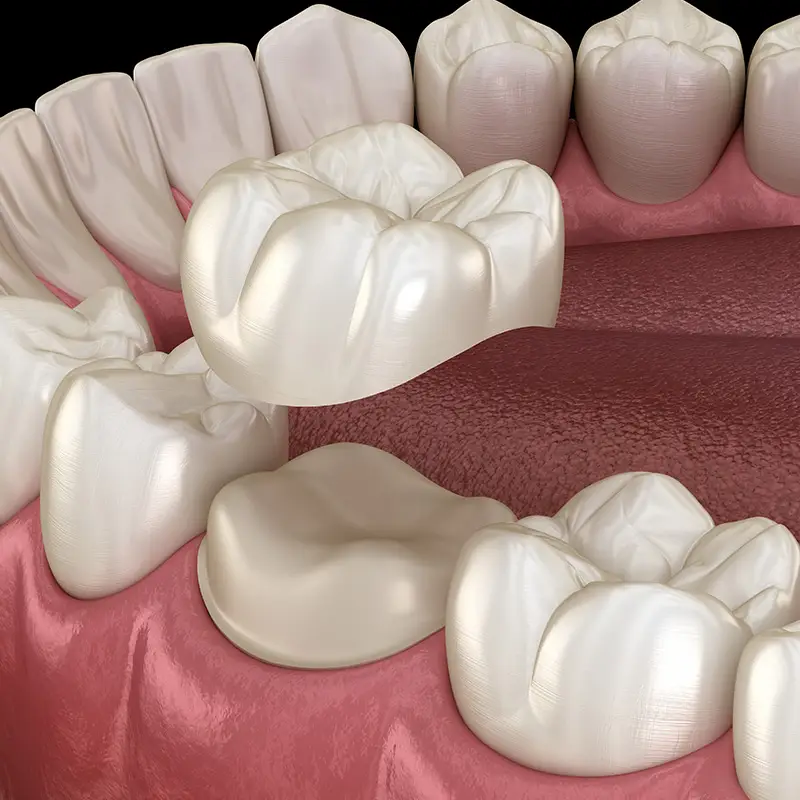
Crowns, also known as caps, encase most of the visible portion of the tooth above the gumline. They are used to improve esthetics and restore functionality to severely damaged, weakened, or misshapen teeth. Crowns provide protection and support for the underlying tooth structure and can be made from various materials including porcelain, ceramic, metal, or a combination of these materials.
When are dental crowns recommended?
Dental crowns are recommended in various situations, including:
-When a tooth is severely decayed or damaged beyond the point where a filling can effectively restore it.
– After a root canal treatment to protect the weakened tooth structure from further damage.
– To cover a dental implant.
-To be used an anchor tooth for a fixed bridge.
-For cosmetic purposes, such as covering misshapen or discolored teeth.
What are different material options for dental crowns?
- All ceramic crowns: These crowns are made entirely of ceramic material, such as porcelain or zirconia. They are highly esthetic and can be matched to the color and translucency of natural teeth, making them an excellent choice for front teeth.
- Full cast metal crowns: These crowns are made entirely of metal, typically gold alloy. They are incredibly durable and resistant to wear, making them suitable for back teeth that undergo significant biting forces.
- Porcelain fused to metal crowns: These crowns consist of a metal substructure covered with a layer of tooth colored porcelain. They combine the strength of metal with the aesthetics of porcelain.
How do I choose the right material for my dental crown?
The choice of crown material depends on various factors, including the location of the tooth, aesthetic preferences, budget, and the dentist’s recommendation. Dr. Homayoon and Dr. Van Winkle will evaluate your specific dental needs and discuss the pros and cons of each material to help you make an informed decision.
How long do crowns last?
The lifespan of a dental crown varies depending on factors such as oral hygiene practices, biting forces, and the material used. On average, dental crowns can last between 5-15 years or more with proper care and maintenance. It is important to know that a cavity can occur at the edge of a crown if it is not well maintained with proper home care and hygiene treatment.
8. How are dental crowns placed?
The tooth is first prepared by removing a layer of enamel to create space for the crown restoration. A digital scan or impression is then taken to fabricate the crown. A temporary crown may be made if the permanent crown is not going to be fabricated the same day. Otherwise, we will mill the crown with our onsite Glidewell I.O. mill while you take a short break (about an hour) and then have you return for the cementation of the final crown the same day.